Privacy can be part of the benefit
Many homeowners like the idea of renting out a room until they imagine losing the small freedoms that make home feel comfortable. Will they need to talk whenever they enter the kitchen? Can they read quietly without appearing unfriendly? Will every decision become a household discussion? These are useful questions, not signs that sharing is impossible. A thoughtful arrangement can preserve substantial independence while adding the benefits of another person living in the home. The aim is not constant togetherness. It is a household where private time and shared space both have a clear place.
The same questions matter to a prospective Bunkmate. They are looking for a home, not permanent guest status or an obligation to keep the Host company. When both people can retreat, make their own plans, and use agreed spaces comfortably, the relationship has room to develop without pressure. This guide focuses on practical ways to create that balance. All examples are hypothetical, and none guarantees a particular outcome. The goal is to help Hosts turn broad hopes about compatibility into clear, respectful conversations.
Describe the ordinary day before the ideal household
A listing that promises a warm, relaxed home sounds appealing, but those words can mean very different things. For one person, relaxed means music while cooking and friends dropping by. For another, it means predictable quiet and few surprises. Begin with an ordinary day in your house. When do you use the kitchen? Do you work at home? Is the television audible from the proposed bedroom? How often do family or friends visit? Concrete details help people assess the living arrangement more reliably than personality labels.
You do not need to publish your entire schedule or sensitive personal information. Instead, provide enough detail to invite useful questions. For example, you might describe a quiet household where people keep independent routines and occasionally share a meal by mutual agreement. During a conversation, explore how that would work in practice. Ask the prospective Bunkmate to describe a comfortable weekday and weekend too. This mutual exchange reveals differences early, when there is still time to discuss them. A good fit is often about compatible expectations rather than identical personalities.
Give private space a clear physical meaning
Privacy is easier to respect when everyone knows where it begins. The Bunkmate's bedroom should be understood as their personal living space, with access handled according to the applicable arrangement and rules. The Host may also have a private bedroom, office, or storage area. Identify these spaces before moving day. Do not rely on someone noticing an invisible boundary or interpreting a closed door in exactly the same way you do. A simple explanation can prevent the feeling that either person must constantly watch where they step.
Consider what the room allows a person to do privately. A comfortable chair, useful lighting, a place to store clothing, and a surface for a laptop may make it easier to relax without occupying a shared room all evening. That does not justify confining a Bunkmate to the bedroom; agreed common areas remain part of their home. It simply gives each adult genuine choices. A house that supports both private retreat and comfortable shared use is more adaptable than one where everybody must gather in the same room to do anything beyond sleeping.
Small design choices can reinforce these boundaries. Position seating so that a shared room does not require looking directly into someone's bedroom. Check whether curtains provide the privacy people expect, and identify a sensible place for confidential papers and personal belongings. Discuss any practical changes together rather than assuming that your preferred arrangement is universal. The aim is not to divide the house into hostile territories. It is to make everyday use intuitive enough that each person can relax without repeatedly asking what is allowed.
Treat independence as mutual
A Host may own the property, but shared living works better when ordinary adult independence is respected on both sides. A Bunkmate should not have to explain every outing, account for every visitor beyond agreed arrangements, or accept unsolicited advice about personal choices. Equally, the Host should not feel obliged to provide social plans, meals, transport, or constant conversation. Clear boundaries allow kindness to remain voluntary rather than slowly becoming an unwritten job description.
Imagine a hypothetical household where both adults enjoy gardening. They might exchange tips or spend an occasional afternoon outside together. That shared interest does not automatically make the Bunkmate responsible for maintaining the Host's garden. Another household may enjoy dinner once a week but otherwise shop and cook independently. The distinction is consent and clarity. Say what is included in the housing arrangement and what is merely an invitation. When plans change, ask rather than assume. Independence does not make a home cold; it helps people choose connection without feeling that their freedom is the price of belonging.
Find compatibility through behaviour, not assumptions
The most useful compatibility questions concern everyday behaviour. Discuss sleep and work patterns, noise, cooking, cleaning, smoking or substance-related household expectations, and use of common areas. Ask open questions such as, 'What helps you feel comfortable in a shared kitchen?' or 'How do you prefer to raise a concern?' These conversations create information both people can use. They are more helpful than deciding that someone will be tidy, sociable, quiet, or reliable because of their age, appearance, accent, disability, or cultural background.
A diverse household can work well when individuals have compatible expectations and treat one another respectfully. It can also include differences that do not need to be resolved into sameness. One person may observe traditions the other does not share; another may have different food preferences or communication styles. Focus on the practical impact on household life, ask respectful questions, and avoid intrusive requests for personal histories. Ontario's Human Rights Commission provides official information on rental housing rights. Seek qualified guidance if you are uncertain about lawful advertising or selection, and keep your process consistent, relevant, and respectful.
Build a kitchen arrangement people can actually use
The kitchen often determines whether a shared home feels easy or awkward. Before listing, consider cupboard and refrigerator space, peak cooking times, cleaning expectations, and which equipment is shared. If a Bunkmate has nowhere to store groceries, each meal becomes a negotiation. If the Host assumes every item in the kitchen is private but never says so, ordinary cooking can create friction. Allocating practical storage and explaining shared use helps both people maintain their routines without repeated permission seeking.
Start with simple agreements: food is separate unless offered, each person cleans up after cooking, and unusual plans that significantly occupy the kitchen are discussed in advance. Adapt those ideas to the actual household rather than creating rules for every conceivable situation. A hypothetical Host who cooks early and a Bunkmate who eats later might share comfortably with little scheduling. Two enthusiastic cooks using a small kitchen at the same time may need more coordination. Neither pattern is inherently better. The benefit comes from designing an arrangement around how the people and the space genuinely function.
Make quiet and connection equally easy
A friendly home does not require everyone to be available whenever someone wants company. Discuss how people signal private time and how sound travels through the house. A closed door, headphones, or a simple 'I am having a quiet evening' should not automatically be interpreted as rejection. In shared areas, consider television volume, video calls, music, and late-night kitchen noise. Practical measures such as moving a speaker away from a bedroom wall can help more than asking someone vaguely to be considerate.
At the same time, leave room for spontaneous warmth. You might offer tea when making a pot, mention a neighbourhood event, or invite the other person to join a meal. Phrase invitations so that declining is comfortable. A hypothetical Bunkmate who declines dinner after a long shift may happily chat the following morning. The household does not need to label that inconsistency as a problem. Connection often develops more naturally when people trust that social participation is optional and that quiet periods will not damage the relationship.
Discuss visitors without making home feel supervised
Visitors affect shared space, noise, privacy, and practical access, so they deserve an early conversation. Both the Host and the Bunkmate may have friends, partners, or family members who are important to them. Discuss how gatherings, overnight visits, and use of common areas would work within the applicable legal arrangement. Avoid assuming that one person's visitors always matter more because they own the home. The aim is a workable household understanding, not a system of monitoring another adult's personal life.
Use concrete examples. What happens if someone wants to host dinner? How much notice would help if several visitors will use the living room? Where can guests park, and which spaces remain private? Put any agreed terms in writing and obtain appropriate advice about their validity where needed. Agreements cannot override applicable law. It is easier to spot a major mismatch during these conversations than after move-in. If one person wants frequent large gatherings while the other needs a consistently quiet home, acknowledge that difference honestly instead of hoping it will disappear.
Use clear communication before small frustrations accumulate
Even compatible people will occasionally misunderstand one another. A towel left in an unexpected place or a noisy call may be a simple oversight, not evidence of disrespect. Agree on a comfortable way to discuss small issues. A brief conversation may work for one household, while another prefers a message followed by a check-in. Avoid assuming that a note on the refrigerator will feel neutral to everyone. The method should make it easier to resolve the issue without embarrassing either person.
Describe the specific behaviour and its impact rather than making a judgement about character. 'The call carried into my bedroom after I went to bed; could we find a quieter spot for late calls?' is more useful than 'You are always inconsiderate.' Invite the other person's perspective, because the solution may involve furniture placement, timing, or an expectation that was never explained. Consider an agreed conversation after the first few weeks to review what is working. This is not an informal eviction trial or a promise of consequence-free cancellation; it is simply a chance to improve everyday household coordination.
Offer support without turning housing into care
People sharing a home may naturally notice when the other person has had a difficult day. Small acts of kindness can be welcome: offering a cup of tea, collecting a parcel with permission, or asking whether someone wants company. Those gestures do not make either adult responsible for the other's health, safety, finances, or emotional wellbeing. A Bunkmate is not automatically a caregiver, and a Host is not automatically a support worker. Keeping that distinction clear protects the independence the arrangement is meant to support.
This matters across Bunking's communities. Senior Living does not promise personal care. Accessible Living does not mean another resident will provide physical assistance. Dry Living does not turn a household into treatment or recovery supervision. Discuss any specific needs honestly and arrange qualified services separately when appropriate. Agree on basic emergency information only with consent and keep it secure. Do not promise that someone will always be present to notice a problem. A shared home can provide welcome human contact while everyone continues to maintain their own support network and professional services.
Make the written arrangement support the relationship
A written agreement is not a substitute for trust, but it can reduce the number of things trust is expected to carry. Record the accommodation offered, costs, included facilities, shared responsibilities, and practical expectations. The rules that apply may differ according to the living arrangement, so obtain appropriate advice rather than assuming every room rental follows the same framework. Ontario's official home-sharing guide can help identify questions to investigate. Check current local requirements and speak with your insurer before proceeding.
Keep the language understandable enough that both people can explain the arrangement in their own words. Discuss how maintenance will be reported, how changes will be considered, and what lawful processes apply if the arrangement ends. Do not make casual promises about immediate removal or unrestricted access to private space. If something important remains unclear, resolve it before move-in. Good documentation supports the positive parts of sharing by reducing surprises. It lets the Host and Bunkmate spend less energy interpreting assumptions and more energy enjoying a home that works predictably.
Create a welcome that makes room for two lives
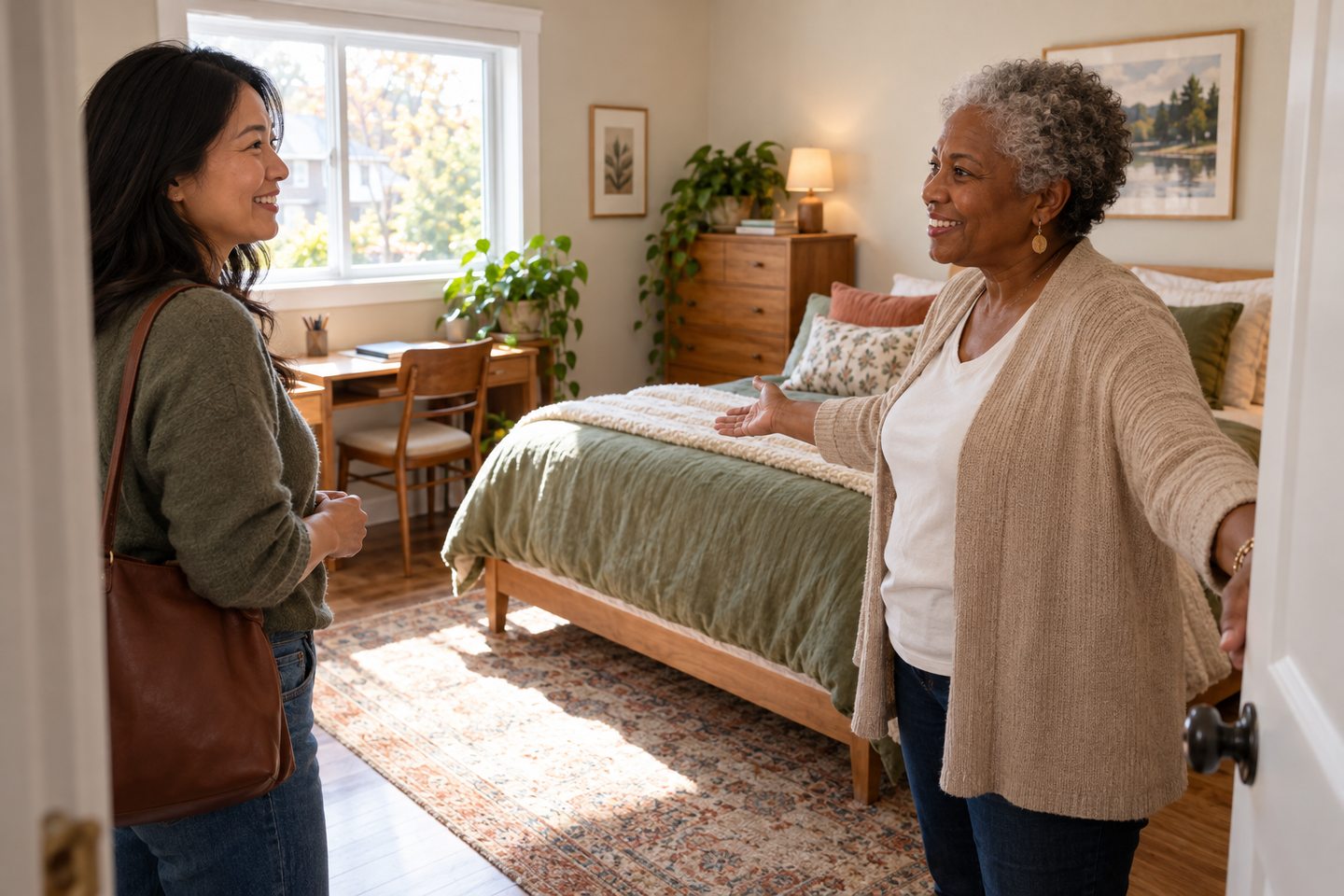
Moving day offers a chance to demonstrate the household you described. Show the Bunkmate their storage, explain practical details, and give them time to settle in without expecting an immediate social performance. A short welcome conversation can cover keys, laundry, waste collection, and how to ask questions. Then allow their private room to become their own space within the agreed arrangement. Feeling welcome includes knowing where you belong and having the freedom to close the door.
The best outcome is not necessarily a lifelong friendship, although friendship may develop. It can simply be two independent adults living comfortably, respecting boundaries, and appreciating occasional company. For a Host, that can make renting a room feel like an addition to life rather than a loss of control over it. For a Bunkmate, it can mean a home with both connection and dignity. When you explore Bunking or prepare a listing, describe this balance honestly: the physical space, everyday routines, and level of interaction on offer. Clear expectations give a compatible household its best starting point.